


The natural remedies for arthritis with the best evidence are the least exotic: moving every day and, if you carry extra weight, losing some of it. Cold on a swollen knee, cabbage leaf wraps, ginger and turmeric extracts give smaller but measurable relief. Cider vinegar and cherry juice have nothing convincing behind them.
The clay, the cider vinegar, the hot water bottle, the cabbage leaves: you have probably heard it all, and it is hard to know what helped. This guide sets each remedy against the published trials. Most of those trials were run on knee osteoarthritis, so the knee is the thread running through it, but the conclusions apply to hips and hands too.
Which arthritis do you have? It changes the answer
Osteoarthritis is the common kind, and the one natural remedies were tested on. It builds up over years, mainly in knees, hips, hands and the base of the thumb. It hurts with use, eases with rest, and the stiffness after sitting wears off within half an hour or so.
Rheumatoid arthritis is something else: an autoimmune disease in which the immune system attacks the joint lining. Typically, several small joints in both hands or feet become swollen, warm and stiff, with stiffness lasting well over 30 minutes each morning, often with tiredness. It needs a GP and a rheumatologist quickly, because the medicines that protect the joints work best when started early. Everything below can sit alongside that treatment. None of it replaces it.
Why a remedy can seem to work on an arthritic knee
Start with a surprising figure. In trials of anti-inflammatory gels lasting 6 to 12 weeks, around half of the people rubbing on a gel with no active ingredient at all saw their pain fall by at least 50%. That comes from a Cochrane review pooling 39 studies and 10,631 participants, most of them with knee osteoarthritis.
It is not imagination. Osteoarthritis symptoms come in flares: a few weeks when the joint swells and wakes you at night, then calmer months. A remedy tried at the peak of a flare almost always lands just as the flare was about to settle on its own. The massage that goes with applying it, the warmth of the hand and the quarter of an hour spent sitting with the leg out do the rest.

The second reason lies in where the pain comes from. Cartilage has no nerves, so it is not the cartilage that hurts. The pain comes from the tissues around it, and each one responds to different things.
WHERE ARTHRITIS PAIN IN THE KNEE COMES FROM
pain
The joint lining
It flares at times, makes too much fluid and swells the knee. This is what cold calms.
The bone under the cartilage
As cartilage thins, the bone takes impacts more directly and becomes sore under load.
The thigh muscle
A weak quadriceps absorbs less of each step. Strengthening it relieves more reliably than any cream.
The weight carried
Every extra kilo is multiplied at the knee, on the flat and even more on stairs.
The nervous system
After months of pain, the nerves amplify the signal, hence the days when the knee hurts for no clear reason.
So remedies do not all hit the same target. A cold pack calms the joint lining, not the bone, and walking works on three of these five sources at once.
Each natural remedy for arthritis, and what it is really worth
The table sorts the most popular remedies into three levels. Tested and useful means at least one controlled trial in its favour. Comfort means no study in arthritis, a believable mechanism and little risk. No proven benefit means nothing shown, or a real risk for some people.
| Remedy | What the studies show | Verdict |
|---|---|---|
| Walking and daily exercise | 139 trials: about 13 points less pain out of 100 | Tested and useful, the strongest |
| Losing weight | Each kilo lost takes about 4 kilos off the knee at every step | Tested and useful |
| Cold pack or ice massage | Less swelling, stronger quadriceps after 3 weeks | Useful on a swollen knee |
| Heat, hot water bottle, warm bath | No measured effect on swelling | Comfort, mainly in the morning |
| Cabbage leaf wraps | Better than usual care at 4 weeks, no better than diclofenac gel | Tested, modest effect |
| Ginger extract | 5 trials: small effect on pain, twice as many dropouts from side effects | Tested, modest effect |
| Turmeric extract | One 12-week trial: 9 points less pain out of 100 | Tested, modest effect |
| Green clay | No trial in knee arthritis | Comfort, through cold and rest |
| Essential oil massage | The massage helps; the oil’s own effect has never been isolated | Comfort, care with wintergreen |
| Devil’s claw, white willow | Old, small trials, modest effects | Plausible, check interactions |
| Tart cherry juice | No better than a placebo drink over 6 weeks | No proven benefit |
| Cider vinegar, lemon, bicarbonate | No studies | No proven benefit |
| Glucosamine | NICE advises against offering it for osteoarthritis | Not recommended in the NHS |
| Complete rest, knee kept still | The quadriceps wastes within weeks | Counterproductive |
WHAT WE ACTUALLY KNOW ABOUT THE POPULAR REMEDIES
The remedies with real evidence are practised, not bought. Those with a measurable effect, cabbage, ginger and turmeric, lower pain by about ten points out of 100: noticeable, but not enough to change the course of the disease.
Cold or heat: which one, and when
The Cochrane review of thermotherapy for knee osteoarthritis found only 3 trials, 179 patients in all, but they point the same way.
Cold for a swollen knee
In the first trial, 20 minutes of ice massage, 5 days a week for 3 weeks, increased quadriceps strength by 29% compared with the control group. In another, cold packs reduced swelling. Ice packs did not, however, lower pain significantly.
Cold therefore suits the hot, swollen knee in the middle of a flare. Wrap the pack in a thin tea towel and leave it for 15 to 20 minutes, up to three times a day. A bag of frozen peas moulds to the joint better than a rigid ice block.

Heat for morning stiffness
Heat showed no effect on swelling. It does relax the muscles and makes the first steps of the day easier. A warm hot water bottle for 20 minutes before you get up, or a hot shower aimed at the knee, prepares the joint for walking. Avoid it on a knee that is already hot and swollen.
With age, and even more with diabetes, the skin senses temperature less well, and burns from hot water bottles or bare ice are not rare. Test on your forearm first, and never fall asleep with a hot water bottle against your skin.
During a flare
Keep walking, but in outings of 5 to 10 minutes rather than one long walk you pay for in the evening. If you limp, hold a stick in the hand opposite the painful knee; on the wrong side it does almost nothing. A knee that locks or will not take your weight needs a doctor.
What you put on the joint: cabbage, clay, oils and gels
Poultices are the least studied remedies of all, with one surprising exception.
Cabbage leaves, the only poultice properly tested
In 2016, a German team compared three approaches in 81 patients with knee osteoarthritis over 4 weeks: cabbage leaves applied for at least 2 hours a day, a diclofenac gel, or usual care. Cabbage reduced pain by 12 points out of 100 more than usual care. Against the gel, the difference was not significant either way.
Nobody knows exactly why. Cabbage contains glucosinolates studied for their anti-inflammatory properties, but the coolness of the leaf, the gentle compression and the time spent resting probably count just as much. The method is simple and safe: rinse green cabbage leaves, flatten the central rib with a rolling pin, lay them on the knee and hold them with a loose bandage for one to two hours.

Green clay, oils and rubs
Green clay has never been tested on knee arthritis. Its effect comes from the coolness of the paste, the light pressure and the half hour of stillness it imposes, the same mechanism described in our article on the green clay poultice. Essential oil massage also soothes, but no trial has separated the oil from the hands. Wintergreen oil, the most quoted, contains methyl salicylate, a close relative of aspirin that reaches the bloodstream: avoid it if you take an anticoagulant, are allergic to aspirin or are pregnant.
Capsaicin cream, made from chilli peppers, is sold for osteoarthritis pain. It burns for the first days of use and its effect in trials is modest.
If you want the best-studied rub, it is not a home remedy. NICE, whose guidance shapes NHS care in England, recommends an anti-inflammatory gel as the first medicine to try for knee osteoarthritis. These gels have been tested on more than 10,000 people: with diclofenac gel, about 10 people need treating for one more to get clear relief than with a gel containing no active ingredient; with ketoprofen, about 7. Modest, but measured.
What you swallow: ginger, turmeric and other plants
Which natural anti-inflammatory works best for arthritis? The trials name no winner, only a family of plant extracts with modest and broadly similar effects.
Ginger
A meta-analysis of 5 trials covering 593 patients found a small reduction in pain with ginger compared with placebo. But people taking it were twice as likely to stop because of a side effect. In the laboratory, its gingerols slow COX-2, the enzyme that anti-inflammatory drugs also block; in the body, the effect is far weaker. The trials used concentrated extracts, not ginger tea.

Turmeric
Turmeric in cooking provides very little curcumin, and curcumin is poorly absorbed from the gut. Trials therefore use extracts. The most rigorous, published in 2020, followed 70 patients for 12 weeks: the extract reduced pain by 9 points out of 100 more than placebo, without shrinking the joint swelling seen on MRI. The study was partly funded by the extract’s manufacturer.
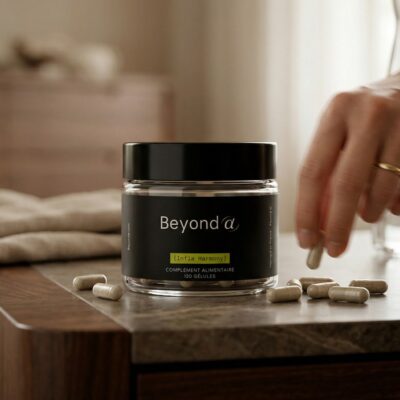
Boswellia follows the same pattern, with several trials of similar size and results, which we cover in our guide to boswellia serrata. These standardised extracts are what our joint formula built on Longvida curcumin and boswellia brings together: 400 mg of Longvida curcumin, 307 mg of boswellia standardised to 65% boswellic acids and 300 mg of ginger extract per daily dose, alongside quercetin and alpha-lipoic acid. It supports an active routine, it does not replace walking or medical advice, and it is not advised if you take an anticoagulant.
Devil’s claw, willow bark, cherry juice and glucosamine
Devil’s claw and white willow bark, the traditional herbal joint remedies, have old, small trials with effects in the same range as ginger. Their precautions are clearer: willow bark contains salicylates, like aspirin, devil’s claw is not advised with a stomach ulcer, and both can strengthen an anticoagulant. Tart cherry juice, two bottles of about 240 ml a day for 6 weeks in 58 patients, did no better than a placebo drink. And NICE advises against offering glucosamine for osteoarthritis.
The two remedies that work best: moving and lightening the load
These are the oldest pieces of advice, and the best supported. Their only drawback is that they take weeks, not an evening.
Move every day
The latest Cochrane review of exercise for knee osteoarthritis, published at the end of 2024, pooled 139 trials and 12,468 participants. Compared with no treatment, exercise reduced pain by about 13 points out of 100 and improved function by a similar amount. The authors stay cautious, because most trials were not blinded. But no type of exercise beat the others, which is good news: the best one is the one you will actually do.
Three moves are enough to start. Walk for 20 to 30 minutes a day, split up if needed. Stand up from a chair without using your hands, 10 times in a row, twice a day, for the quadriceps. Cycle, on an exercise bike or outdoors, which works the knee without loading it. Pain rising to 4 or 5 out of 10 during exercise is acceptable if it settles within the hour. If the knee is more swollen the next day, step back one notch rather than stopping.

Lighten the knee
An American team analysed the gait of 142 overweight people with knee osteoarthritis before and after 18 months of diet and exercise. Each kilo lost reduced the force on the knee by about 4 kilos at every step.
Each kilo you lose takes about four kilos off the knee at every step. Over 5,000 steps a day, losing five kilos spares each knee close to 50 tonnes of load daily.
Messier et al., Arthritis & Rheumatism, 2005. Calculation based on 2,500 steps per knee per day.
Inactivity and weight feed each other, since a painful knee makes you move less. You do not need to reach a target weight to benefit: every kilo counts, quite literally.
Remedies that can do you harm
A remedy is not harmless because it is old. Hidden salicylates, in willow bark, wintergreen or meadowsweet, are no gentle option with an anticoagulant, an aspirin allergy or an ulcer. Turmeric extract, concentrated ginger, devil’s claw and high-dose fish oil can each strengthen a blood thinner, so stacking them deserves a word with your pharmacist. Complete rest wastes the quadriceps within weeks. And no capsule rebuilds worn cartilage, whatever the label says.
When to see a GP
Home remedies have their place in arthritis that has already been diagnosed. See a GP promptly if:
- a joint becomes red, hot and very swollen, especially with a fever, which can mean infection or gout;
- the knee locks or gives way under you;
- the pain wakes you every night regardless of movement;
- the calf on the same side becomes swollen and painful;
- several small joints in your hands or feet swell at the same time.
Not every painful knee is arthritis. Pain below the kneecap or on the inside of the knee after running or stairs, in someone younger, often comes from a tendon, and our guide to knee tendonitis helps tell them apart. If it is your fingers that ache, our article on hand osteoarthritis covers what the NHS offers. A physiotherapist can also build an exercise programme with you, still the best use of time in this whole article.
Frequently asked questions
Is there a cure for osteoarthritis in the knee?
No treatment rebuilds worn cartilage. Symptoms, though, are not fixed: regular exercise, losing excess weight and a well-chosen pain relief plan reduce pain and stiffness for most people, and arthritis does not always get worse. When a knee stays severely painful despite all that, a knee replacement is the option discussed with an orthopaedic surgeon.
What part of the knee hurts when you have osteoarthritis?
Most often the inner side of the knee, which carries more of the body’s weight, or the front around the kneecap, especially on stairs and when getting up from a chair. The pain is worse with activity and eases with rest. Stiffness after sitting usually wears off within half an hour of moving.
What is the best natural anti-inflammatory for arthritis?
None stands clearly above the others. Ginger, turmeric extract and boswellia each give a modest drop in pain in trials, of the same order as each other. Cold on a swollen knee works locally. The approaches with the most evidence, exercise and weight loss, are not anti-inflammatories at all.
How do you live well with osteoarthritis?
Keep moving every day, in short sessions if needed, and strengthen the thigh muscles. Pace demanding tasks across the week, use a stick in the opposite hand during flares, wear cushioned shoes and keep a stable weight. A physiotherapist can design a programme with you, often through NHS self-referral.
Can I claim PIP for osteoarthritis?
Possibly. Personal Independence Payment depends on how a condition limits daily living and getting around on most days, not on the diagnosis. Someone whose arthritis makes walking, washing, dressing or cooking hard can qualify; mild arthritis usually does not. In Scotland the equivalent benefit is Adult Disability Payment.
Sources
Lawford B.J., Hall M., Hinman R.S. et al. (2024). Exercise for osteoarthritis of the knee. Cochrane Database of Systematic Reviews. DOI: 10.1002/14651858.CD004376.pub4
Messier S.P., Gutekunst D.J., Davis C., DeVita P. (2005). Weight loss reduces knee-joint loads in overweight and obese older adults with knee osteoarthritis. Arthritis & Rheumatism, 52(7), 2026-2032. DOI: 10.1002/art.21139
Brosseau L., Yonge K., Welch V. et al. (2003). Thermotherapy for treatment of osteoarthritis. Cochrane Database of Systematic Reviews. DOI: 10.1002/14651858.CD004522
Lauche R., Gräf N., Cramer H. et al. (2016). Efficacy of cabbage leaf wraps in the treatment of symptomatic osteoarthritis of the knee: a randomized controlled trial. The Clinical Journal of Pain, 32(11), 961-971. DOI: 10.1097/AJP.0000000000000352
Bartels E., Folmer V., Bliddal H. et al. (2015). Efficacy and safety of ginger in osteoarthritis patients: a meta-analysis of randomized placebo-controlled trials. Osteoarthritis and Cartilage, 23(1), 13-21. DOI: 10.1016/j.joca.2014.09.024
Wang Z., Jones G., Winzenberg T. et al. (2020). Effectiveness of Curcuma longa extract for the treatment of symptoms and effusion-synovitis of knee osteoarthritis: a randomized trial. Annals of Internal Medicine, 173(11), 861-869. DOI: 10.7326/M20-0990
Schumacher H., Pullman-Mooar S., Gupta S. et al. (2013). Randomized double-blind crossover study of the efficacy of a tart cherry juice blend in treatment of osteoarthritis (OA) of the knee. Osteoarthritis and Cartilage, 21(8), 1035-1041. DOI: 10.1016/j.joca.2013.05.009
Derry S., Conaghan P., Da Silva J.A.P., Wiffen P.J., Moore R.A. (2016). Topical NSAIDs for chronic musculoskeletal pain in adults. Cochrane Database of Systematic Reviews. DOI: 10.1002/14651858.CD007400.pub3


