


Ice or heat for tendonitis depends on its age. Ice suits the first few days, when the tendon is swollen, warm or sore at rest: 10 minutes on, 10 minutes off, then 10 minutes on. Heat suits tendonitis that has lasted for weeks and feels stiff, for 15 to 20 minutes before you move. Neither one repairs the tendon: gradual loading does.
Most advice stops at “ice first, heat later”. That is right, but incomplete. Ice calms pain without healing anything, and used for too long it may even slow repair. Heat only makes sense on a tendon that is no longer inflamed, which describes most tendonitis that drags on.
Ice or heat: how to tell what your tendon needs
The deciding factor is not which tendon hurts, shoulder, elbow or knee. It is how old the pain is, and how it behaves.
Pain that started less than three days ago, after unusual effort, with a tendon that is puffy or aches at rest: that calls for ice. Pain that has lasted more than six weeks, stiff in the morning, easing once you warm up: that calls for heat. In between, many tendons need neither.
Ice or heat by the age of the pain
Why does ice ease a new tendonitis?
Cold works first on the blood vessels. They narrow, blood flow drops, and so does swelling. On the Achilles tendon, a German team measured it live in 26 volunteers.
capillary blood flow at the surface of the Achilles tendon during each application of cold and compression, and -78% deeper down.
Knobloch et al., American Journal of Sports Medicine, 2006, three 10-minute applications.
It then works on the nerves. Skin that is cold enough conducts pain signals less well. In a British trial at Coventry University, a 454 g bag of frozen peas brought the skin down to 10.8 degrees in 20 minutes, cold enough to numb it. A flexible gel pack stalled at 14.4 degrees, too warm for that effect.
Those two effects explain the quick relief. They do not explain healing: narrowing the vessels does nothing for a tendon that is rebuilding itself.
How long and how often should you ice tendonitis?
The NHS suggests an ice pack or frozen peas wrapped in a tea towel for up to 20 minutes every 2 to 3 hours, for the first 2 to 3 days. One of the few protocols tested on injured people comes from Northern Ireland: a University of Ulster trial on 89 sprained ankles, an acute soft-tissue injury comparable to a tendon that has just flared. One group iced for 20 minutes straight. The other iced for 10 minutes, rested for 10, then iced for another 10. Every two hours, for 72 hours.
A week later, the intermittent group had less pain when moving, with no difference in swelling. The short format has a practical bonus too: the skin warms up between applications, which lowers the risk of an ice burn.

As for what to use, wet ice cools better than crushed ice. In 12 volunteers, a bag of ice cubes with a little water lowered muscle temperature more than the same amount of crushed ice. Always keep a thin damp cloth between the bag and your skin.
| Situation | What to use | How long | When |
|---|---|---|---|
| Recent pain, swollen tendon | Wet ice in a damp cloth | 10 min on, 10 off, 10 on | Every 2 hours, for 2 to 3 days |
| Old tendon flaring after effort | Ice | 10 to 15 minutes | After the effort, while the flare lasts |
| Established tendonitis, stiff in the morning | Gentle heat: hot water bottle, heat pad, warm towel | 15 to 20 minutes | Just before exercise or a walk |
| Red, hot tendon with a fever | Neither | Do not wait | See a doctor the same day |
Does ice slow down tendon healing?
This is the question that has shifted the guidance. In 2019, two Canadian physiotherapists proposed replacing the old RICE formula with PEACE and LOVE. The A in PEACE stands for avoiding anti-inflammatories, and the authors also question ice: the inflammation of the first days is part of the repair.
The data come mostly from animals. In rats, ice applied straight after a muscle injury delayed macrophage activity by 1 to 2 days, the cells that clear up and then rebuild, and left more scar collagen at 28 days. In people, 11 volunteers iced after hard exercise recovered somewhat more slowly than without cold.

None of these studies looked at a tendon, and that is the honest limit of the debate. Treat ice as a painkiller, not a treatment. Use it to get through 2 or 3 days, then drop it once it stops helping.
When does heat help tendonitis?
After a few weeks, tendonitis is barely inflammatory any more. A painful tendon mostly contains disorganised collagen, which is why doctors prefer the word tendinopathy. Icing a three-month-old tendon to “bring the swelling down” targets inflammation that is no longer there.
Heat answers a different need: stiffness. It increases blood flow and tissue elasticity, and eases pain. The strongest trials of heat concern back pain and muscle soreness, not tendons. The principle carries over well enough: 15 to 20 minutes of gentle heat just before you move makes the first movements easier.

The right moment is therefore before your rehab exercises or your walk, not after. If the tendon complains after the effort, ice can come back for a few minutes. Contrast bathing, switching between hot and cold, has no proven effect of its own on tendons: if it helps you, nothing rules it out.
Which mistakes should you avoid with ice and heat?
Five habits do more harm than good:
- putting ice or a pack straight from a freezer at -18 degrees directly on the skin: on a wrist, elbow or ankle, an ice burn comes quickly;
- heating a tendon that is swollen, red or warm to the touch, where blood is already rushing in;
- falling asleep on a hot water bottle or heat pad, especially with diabetes, when the skin senses heat poorly;
- icing just before exercise: pain, your safety signal, is masked and you overload the tendon;
- letting ice and heat replace rehabilitation, when they ease pain without rebuilding anything.
What actually heals tendonitis
A tendon rebuilds under load. That is the common thread of our guides by body part: for wrist tendonitis, rest alone almost never works, and knee tendonitis needs a different exercise depending on where it hurts. Ice and heat fit around that work, to make the sessions bearable.
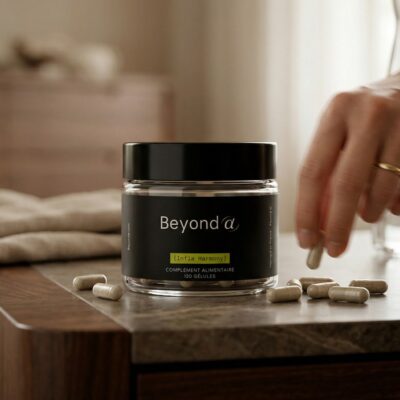
Your general health matters too: sleep, diet, background inflammation. To support it during rehabilitation, our tendon and recovery formula combines standardised curcumin, boswellia and ginger. It replaces neither loading nor medical advice, and is not recommended with anticoagulants, in pregnancy or with diabetes.
When to see a GP
See a GP if the tendon is red and hot with a fever, if pain wakes you every night, or if nothing has changed after a few weeks of self-care. Call NHS 111 if a snap or pop was followed by a loss of strength, which can mean a rupture. Tendon pain that starts during a course of a fluoroquinolone antibiotic, such as ciprofloxacin or levofloxacin, also needs prompt advice. In many areas you can refer yourself to NHS physiotherapy.
Frequently asked questions
Is heat good for tendonitis?
Yes, once it has lasted several weeks and mainly feels stiff: 15 to 20 minutes of gentle heat before you move loosens the tissues. No, if the tendon is swollen, red or warm, or the pain started less than three days ago: ice is the better choice then. Heat eases symptoms, it does not repair the tendon.
Why is ice no longer recommended?
It still is, for short-term pain relief. What has changed is its role: the PEACE and LOVE guidance of 2019 treats early inflammation as part of repair, and animal studies suggest prolonged icing delays the cells that rebuild tissue. Use it for 2 or 3 days to ease pain, not as a treatment.
What makes swelling go down faster, cold or hot?
Cold. It narrows the blood vessels: on the Achilles tendon, cold with compression cut surface blood flow by 94% during each application. Heat does the opposite and can increase swelling on a fresh injury. Once the swelling has gone and stiffness remains, heat becomes the more useful of the two.
Should I use ice or heat for knee pain?
It depends on the cause and its age. A knee tendon that flared in the last few days, swollen or sore at rest, does better with ice. Long-standing stiffness, as in knee osteoarthritis or an old patellar tendinopathy, usually responds better to heat before activity. Sudden swelling after a twist needs assessment.
Sources
Dubois B., Esculier J.F. (2020). Soft-tissue injuries simply need PEACE and LOVE. British Journal of Sports Medicine, 54(2), 72-73. DOI: 10.1136/bjsports-2019-101253
Bleakley C.M., McDonough S.M., MacAuley D.C. (2006). Cryotherapy for acute ankle sprains: a randomised controlled study of two different icing protocols. British Journal of Sports Medicine, 40(8), 700-705. DOI: 10.1136/bjsm.2006.025932
Knobloch K., Grasemann R., Jagodzinski M. et al. (2006). Changes of Achilles midportion tendon microcirculation after repetitive simultaneous cryotherapy and compression using a Cryo/Cuff. American Journal of Sports Medicine, 34(12), 1953-1959. DOI: 10.1177/0363546506293701
Chesterton L.S., Foster N.E., Ross L. (2002). Skin temperature response to cryotherapy. Archives of Physical Medicine and Rehabilitation, 83(4), 543-549. DOI: 10.1053/apmr.2002.30926
Dykstra J.H., Hill H.M., Miller M.G. et al. (2009). Comparisons of cubed ice, crushed ice, and wetted ice on intramuscular and surface temperature changes. Journal of Athletic Training, 44(2), 136-141. DOI: 10.4085/1062-6050-44.2.136
Takagi R., Fujita N., Arakawa T. et al. (2011). Influence of icing on muscle regeneration after crush injury to skeletal muscles in rats. Journal of Applied Physiology, 110(2), 382-388. DOI: 10.1152/japplphysiol.01187.2010
Tseng C.Y., Lee J.P., Tsai Y.S. et al. (2013). Topical cooling (icing) delays recovery from eccentric exercise-induced muscle damage. Journal of Strength and Conditioning Research, 27(5), 1354-1361. DOI: 10.1519/JSC.0b013e318267a22c
Malanga G.A., Yan N., Stark J. (2015). Mechanisms and efficacy of heat and cold therapies for musculoskeletal injury. Postgraduate Medicine, 127(1), 57-65. DOI: 10.1080/00325481.2015.992719


