


Hip bursitis, or trochanteric bursitis, is inflammation of the fluid-filled sac over the greater trochanter, the bony point on the outside of your hip. It hurts on the outer hip, especially lying on that side. On ultrasound, though, the bursa is inflamed in only 1 patient in 5: the gluteal tendons are usually the real source.
If you have just been told you have hip bursitis, that detail changes what comes next. Treating the bursa alone calms the pain fast and often lets it return. Treating the tendon takes longer, and lasts.
What is hip bursitis?
A bursa is a small, flat sac lined with a film of fluid, which lets a tendon glide over bone without rubbing. The one that causes trouble almost every time is the trochanteric bursa, wedged between the greater trochanter and the iliotibial band, the tough strip of tissue running down the outside of the thigh.
Two other bursae are involved far less often: the iliopsoas bursa, which hurts in the groin crease, and the ischial bursa under the buttock, which hurts when you sit on a hard seat.

Doctors increasingly use the name greater trochanteric pain syndrome, or GTPS, which is what NHS inform in Scotland calls it. The label describes the place, not the damaged structure. Among 3,026 American adults aged 50 to 79, 23.5% of women and 8.5% of men had the signs of it.
Bursitis or gluteal tendinopathy: what the ultrasound shows
In 2013, a team in Philadelphia reviewed the ultrasound scans of 877 patients referred for this pain. The result contradicts the usual label.
What ultrasound finds in 877 patients
the greater
trochanter
Gluteal tendinopathy · 49.9%
The gluteus medius or minimus tendon is thickened and disorganised where it attaches to the bone.
Thickened IT band · 28.5%
The band covering the trochanter is thicker than normal.
Bursitis · 20.2%
The bursa is swollen with fluid. It often comes with a tendon problem.
Torn tendon · 0.5%
Rare. Worth considering if the strength of the buttock muscles drops sharply.
Four times out of five, then, the bursa is not inflamed. The usual culprit is the gluteus medius tendon, which steadies your pelvis with every step. When the bursa does hurt, it is often irritated by its neighbour.
The distinction changes the treatment. An isolated bursitis after a knock can settle in a few weeks. Gluteal tendinopathy needs gradual strengthening over several months, set out stage by stage in our article on hip tendonitis and why the stretches make it worse. This page sticks to what is specific to bursitis.
Hip bursitis symptoms
Three signs come up almost every time. Pain on the outside of the hip that you can point to with one finger. Pain lying on that side, which wakes you at night. Pain that builds when you get up from a low chair, climb stairs or stand on that leg.
The ache can spread down the side of the thigh, rarely below the knee. A true bursitis sometimes causes a slight warm swelling, which tendinopathy alone does not.
Two simple tests your GP or physiotherapist can do
An Australian team compared clinical tests with MRI in 65 patients. The most telling test was also the simplest: standing on the painful leg for 30 seconds. If pain appears on the side of the hip before the time is up, the probability of gluteal tendinopathy rises from 50% to 98%.
Conversely, a greater trochanter that is not tender to pressure makes the diagnosis unlikely: pressing on it picks up 80% of cases. These tests guide, they do not replace an examination.

What could be mistaken for hip bursitis?
Five kinds of pain are easily confused on or around the hip. The table sets out the clues that separate them.
| Where it hurts | What sets it off | Most likely cause |
|---|---|---|
| Outside of the hip, under one finger | Lying on that side, standing on one leg, stairs | Gluteal tendinopathy, with or without bursitis |
| Outside of the hip, swollen and warm | A knock or fall on the hip, repeated friction | Trochanteric bursitis in its own right |
| Groin crease | Putting on a sock, getting into a car, turning the leg | Hip osteoarthritis or a problem inside the joint |
| Front of the thigh, down to the knee | Coughing, leaning back, at night | Femoral nerve pain, L3 or L4 root |
| Back of the thigh, below the knee | Sitting, coughing, bending forward | Sciatica, L5 or S1 root |
If your pain runs down the front of the thigh or below the knee, suspect a nerve rather than a bursa. Our guides to femoral nerve pain and to the route of the sciatic nerve show where each kind of leg pain travels.
What triggers hip bursitis?
The most common trigger is compression. Every time your thigh drifts inwards, the band presses the tendon and the bursa against the greater trochanter.
How a posture turns into pain
Overload adds to it, such as a return to hill walking or running after a long break. A direct fall onto the side of the hip produces the form in which the bursa really is the main problem.
Your background matters too. In Segal’s cohort, being a woman made the syndrome 3.4 times more likely, as did osteoarthritis of the knee on the same side, and low back pain 2.8 times. Excess weight, often blamed, no longer counted once those factors were taken into account.
Does hip bursitis go away, and how long does it last?
Without the right care, longer than people expect. A Dutch general practice study, published in the British Journal of General Practice, followed up 164 patients. At least 36% still had pain a year after their first consultation, and 29% five years later.
With targeted treatment, the picture changes. The Australian LEAP trial (BMJ, 2018) randomised patients in pain for more than three months. After 8 weeks, 77% of the education and exercise group reported a clear improvement, against 58% after an injection and 29% of those told to wait and see. At one year the gap held: 78% against 57% after the injection, and 52% for those who had waited.
That explains why two NHS pages seem to disagree. The general bursitis page for England says it should go away in a few weeks. NHS inform’s page on GTPS warns that rehabilitation often takes 6 to 12 months. The first describes a bursa, the second a tendon.
Hip bursitis treatment: what works, in what order
First remove the compression, then load the tendon, and only then consider injections or shockwave.
What you can change tonight
Sleep on your back, or on your good side with a thick pillow between your knees. Stop crossing your legs, stop hanging on one hip, and avoid very low seats.

Avoid the buttock stretch that pulls your knee towards the opposite shoulder: it feels good at the time but presses the tendon onto the bone. Ice for about 10 minutes, wrapped in a tea towel as the NHS suggests, calms an acute flare without repairing anything. And keep walking on the flat, within what you tolerate: complete rest weakens the tendon within weeks.
Exercise, the foundation of treatment
The winning LEAP programme combined learning which positions to avoid with gradual strengthening of the buttock muscles: 14 physiotherapy sessions over 8 weeks, plus daily exercises at home. It starts with static contractions, then adds load step by step. In many areas you can refer yourself to NHS physiotherapy without seeing your GP first.
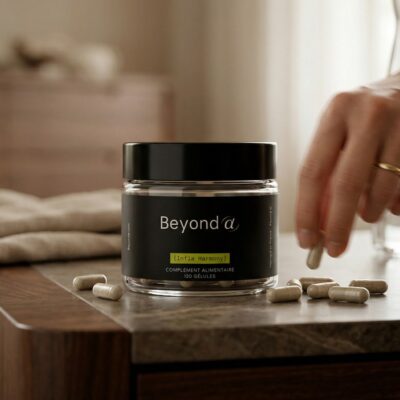
Short sleep, smoking, diabetes or low-grade inflammation all slow tissue repair. Some people choose to support their rehabilitation with a standardised joint formula led by curcumin and boswellia. It comes on top of exercise, never instead of it, and is not recommended with anticoagulants, in pregnancy or with diabetes.
Steroid injection or shockwave: what the trials say
When the pain holds out, their value depends on whether you look one month or one year ahead.
| Treatment | Short term | Long term | Best suited to |
|---|---|---|---|
| Corticosteroid injection | 75% success at 1 month | 48% at 15 months, worse than exercise | Acute pain that stops you sleeping or moving |
| Radial shockwave therapy | 13% at 1 month, 68% at 4 months | 74% at 15 months | Long-standing pain after exercise alone has failed |
| Exercise programme | 7% at 1 month, 77% at 8 weeks | 80% at 15 months, 78% at one year | Everyone, as first-line treatment |
Read this table against your instincts. In Rompe’s trial of 229 patients, the injection was the fastest and the least durable. It can serve as a bridge to sleep and start exercising, rarely as a solution on its own. Exercise does almost nothing in the first month, then overtakes everything else. Surgery, removing the bursa or repairing a torn tendon, is kept for the rare cases where months of well-run treatment have failed.
When to see a GP about hip pain
Get seen quickly, without waiting for a routine appointment, in these situations:
- the hip is red, hot and swollen and you have a fever: an infected bursa needs urgent treatment;
- the pain follows a fall and you cannot put weight on the leg, especially after 65;
- the pain sits in the groin crease or blocks the hip from turning;
- weakness, numbness or pain below the knee appears;
- night pain eases in no position at all, or you are losing weight without trying.
Otherwise, the NHS advises seeing a GP if self-care has not helped after 1 to 2 weeks. An ultrasound scan separates bursa, tendon and band in a few minutes, and it is often what moves treatment from the bursa to the tendon.
Frequently asked questions
Does hip bursitis go away?
Often, but not always quickly. A bursitis after a knock can settle in a few weeks. When the gluteal tendons are involved, the usual case, at least 36% of patients still had pain a year later without targeted care, while 8 weeks of exercise clearly improved 77% in the LEAP trial.
What is the fastest way to heal bursitis of the hip?
Stop compressing the outer hip, then strengthen the buttock muscles. Sleep with a pillow between your knees, avoid crossing your legs and low seats, and start a graded exercise programme. A steroid injection eases pain fastest, with 75% success at one month, but does worse than exercise after a year.
What could be mistaken for hip bursitis?
Gluteal tendinopathy above all, which ultrasound finds far more often than a swollen bursa. Groin pain points to the hip joint itself, such as osteoarthritis. Pain running down the front of the thigh suggests femoral nerve pain, and pain below the knee at the back suggests sciatica.
What triggers hip bursitis?
Mostly compression of the outer hip: crossing your legs, standing with your weight on one hip, or the top knee dropping onto the mattress at night. A sudden increase in walking or running, or a fall onto the side of the hip, can also set it off. Women are 3.4 times more often affected.
Sources
Long S.S., Surrey D.E., Nazarian L.N. (2013). Sonography of greater trochanteric pain syndrome and the rarity of primary bursitis. American Journal of Roentgenology, 201(5), 1083-1086. DOI: 10.2214/AJR.12.10038
Segal N.A., Felson D.T., Torner J.C. et al. (2007). Greater trochanteric pain syndrome: epidemiology and associated factors. Archives of Physical Medicine and Rehabilitation, 88(8), 988-992. DOI: 10.1016/j.apmr.2007.04.014
Grimaldi A., Mellor R., Nicolson P. et al. (2017). Utility of clinical tests to diagnose MRI-confirmed gluteal tendinopathy in patients presenting with lateral hip pain. British Journal of Sports Medicine, 51(6), 519-524. DOI: 10.1136/bjsports-2016-096175
Grimaldi A., Fearon A. (2015). Gluteal tendinopathy: integrating pathomechanics and clinical features in its management. Journal of Orthopaedic and Sports Physical Therapy, 45(11), 910-922. DOI: 10.2519/jospt.2015.5829
Mellor R., Bennell K., Grimaldi A. et al. (2018). Education plus exercise versus corticosteroid injection use versus a wait and see approach on global outcome and pain from gluteal tendinopathy: prospective, single blinded, randomised clinical trial. BMJ, 361, k1662. DOI: 10.1136/bmj.k1662
Rompe J.D., Segal N.A., Cacchio A. et al. (2009). Home training, local corticosteroid injection, or radial shock wave therapy for greater trochanter pain syndrome. American Journal of Sports Medicine, 37(10), 1981-1990. DOI: 10.1177/0363546509334374
Lievense A., Bierma-Zeinstra S., Schouten B. et al. (2005). Prognosis of trochanteric pain in primary care. British Journal of General Practice, 55(512), 199-204. PubMed: 15808035


