


At up to 8 mg a day, the limit authorised for food supplements in Great Britain, astaxanthin has shown no danger in adults: a review of 87 human studies found no safety concern with the natural form. The real cautions are children under 14, pregnancy, some medicines and the quality of the product.
You may have read that astaxanthin turns stools red, tints the skin, lowers blood pressure, upsets hormones, or causes low calcium and even osteoporosis. Some of these claims are true. Others rest on a study in rats or on a herbal blend. Before you swallow the first capsule, here is what has been measured, in whom, and at what dose, the same approach we took to quercetin, its evidence in humans and who should avoid it.
Where astaxanthin comes from, and how much you already eat
Astaxanthin is a red pigment from the carotenoid family, like beta-carotene, but your body does not turn it into vitamin A. A freshwater microalga, Haematococcus pluvialis, makes large amounts of it when stressed by a lack of nitrogen, strong light or heat. Shrimp and krill eat the algae, salmon eat the shrimp. That is what turns salmon flesh pink.
The amounts vary widely. According to Ambati’s review in Marine Drugs, wild sockeye salmon contains 26 to 38 mg of astaxanthin per kilo of flesh, farmed Atlantic salmon 6 to 8 mg. A 150 g fillet of farmed salmon therefore gives you about 1 mg.

A capsule usually holds 4 to 8 mg, sometimes 12. You move from a dietary intake of around a milligram to a concentrated dose taken every day for weeks. That change of scale is why the question of danger is a fair one.
Astaxanthin: where the doses sit
What the safety studies show
The most complete review comes from Thomas Brendler and Elizabeth Williamson, of the University of Reading’s School of Pharmacy, published in Phytotherapy Research in 2019. Doses recommended or approved around the world ranged from 2 to 24 mg a day. They reviewed 87 human studies: none found a safety concern with natural astaxanthin, and 35 of them used 12 mg a day or more.
The trial by Spiller and Dewell gives a concrete picture. Thirty-five adults aged 35 to 69 took 6 mg of astaxanthin a day, or a placebo, for 8 weeks. Blood pressure, a comprehensive metabolic panel and a full blood count were checked at the start, at 4 weeks and at 8 weeks. Nothing differed between the groups except three values: blood calcium, total protein and one type of white cell. The authors judged the differences very small and of no clinical importance.
When a health site lists low calcium, osteoporosis or parathyroid problems among the risks of astaxanthin, that tiny shift in blood calcium is the closest thing to human data behind the warning.
What EFSA and the Food Standards Agency allow
In 2020 the European Food Safety Authority reassessed astaxanthin in supplements. It set an acceptable daily intake of 0.2 mg per kilo of body weight, 14 mg for a 70 kg adult, and concluded that 8 mg a day from a supplement, on top of what fish and shellfish provide, is safe for adults.
Great Britain kept the same ceiling. In an assessment published in February 2026, the Food Standards Agency and Food Standards Scotland describe the current authorisation: 40 to 80 mg of algal oleoresin a day, giving no more than 8 mg of astaxanthin, for the general population excluding infants, children and adolescents under 14. The reason shows in EFSA’s figures by age, because the same dose lands on a much lighter body.
| Age | Diet plus an 8 mg supplement | What it means |
|---|---|---|
| Adults | About 13% below the acceptable daily intake | Considered safe |
| 14 to 17 years | Reaches the acceptable daily intake | No margin left: ask your GP first |
| 10 to 13 years | 28% above the acceptable daily intake | Not for this age |
| Infants aged 4 to 6 months | Up to 524% of the acceptable daily intake | Never |
The acceptable intake has moved, too. In 2014 EFSA had set it at 0.034 mg per kilo, around 2 mg a day for an adult, based on a rat study that used synthetic astaxanthin. Brendler and Williamson challenged that choice: the synthetic molecule is chemically different from the natural one, and its results should not be used to judge the other.
What are the side effects of astaxanthin?
Red stools: a pigment passing through
It is the effect people talk about most, and the most harmless. Astaxanthin is a strong dye. The part you do not absorb travels through the gut and colours your stools a dark red.
Why stools can turn red
Skin colour, and what it does to your face
Carotenoids settle partly in the skin, and an orange tint is well known with high doses of beta-carotene. With astaxanthin at supplement doses, skin discolouration is not among the problems Brendler and Williamson found across their 87 studies. The trials on wrinkles and skin moisture are small and short, so they say little either way.
If your skin turns yellow, and especially the whites of your eyes, do not blame the pigment first. Jaundice shows in the eyes before anywhere else, and it needs a medical check.
Stomach upset
Mild stomach discomfort or looser, more frequent stools are reported mostly when the capsule is taken on an empty stomach. The fix is simple: take it in the middle of a meal that contains a little fat, which also improves absorption.
What should not be taken with astaxanthin?
This is where the real cautions sit. They rest on weaker data than the safety studies, which does not make them negligible.
Blood pressure medicines
In 2005, Hussein showed that astaxanthin lowered the blood pressure of rats bred to be hypertensive, including at 50 mg per kilo for 5 weeks in a stroke-prone strain, but not that of rats with normal pressure. In healthy adults, Spiller’s trial found no change at 6 mg a day. If you take blood pressure tablets, adding the two effects remains theoretical, but it is worth checking your readings during the first weeks.

Hormones and the prostate
In the laboratory, astaxanthin slows 5-alpha-reductase, the enzyme that turns testosterone into dihydrotestosterone (DHT) and the target of finasteride. The human trial most often quoted, by Angwafor and Anderson in 2008, followed 42 men aged 37 to 70 for 14 days: testosterone rose and DHT fell.
Look closer, though. The product combined astaxanthin with saw palmetto, the trial had no placebo group, and its second author was the research director of a supplement company. If you take a prostate treatment or any hormone therapy, ask your GP or urologist first.
Medicines cleared by the liver
Kistler showed in 2001 that, in human liver cells grown in culture, astaxanthin switched on two enzymes that clear many drugs, CYP3A4 and CYP2B6. The same team found its breakdown products in the blood of two volunteers 24 hours after a 100 mg dose. Nobody has measured whether this changes the level of any medicine at supplement doses. That, rather than liver damage, is the real liver question. Medicine by medicine, here is what is described and what to do.
| Medicine | What is described | Strength of evidence | What to do |
|---|---|---|---|
| Blood pressure tablets | Lower pressure in hypertensive rats | Animal; no effect at 6 mg in healthy adults | Check your readings at the start |
| Finasteride, dutasteride, hormone treatments | Action on 5-alpha-reductase, measured with a saw palmetto blend | Short trial, no placebo | Ask your urologist or endocrinologist |
| Medicines cleared by CYP3A4 (immunosuppressants, some cancer drugs) | CYP3A4 and CYP2B6 switched on in human liver cells | Laboratory only; clinical effect unmeasured | Do not start without medical advice |
| Warfarin and other blood thinners, antiplatelets | Interaction quoted everywhere, with no published clinical trial that we know of | Precaution | Tell your anticoagulation clinic or pharmacist |
| Levothyroxine | No published data | Unknown | Take it at a different time and tell your GP |
Pregnancy, children and teenagers: who should avoid it
We found no safety study of astaxanthin supplements in pregnant or breastfeeding women. Without data, the supplement is best avoided: a precaution by default, not the result of an observed harm. Salmon stays on the menu, within the NHS limit of 2 portions of oily fish a week in pregnancy, and cooked prawns are fine too.
For children and teenagers the figures speak for themselves. With 8 mg a day, a child aged 10 to 13 goes 28% over the acceptable intake, and the British authorisation leaves out everyone under 14. An adult supplement has no place in a schoolchild’s routine, however sporty.
Natural or synthetic: the quality question
Commercial astaxanthin has three origins: the microalga Haematococcus pluvialis, certain yeasts, and chemical synthesis. The difference goes beyond the label. The alga makes essentially one form of the molecule, called 3S,3’S, mostly bound to fatty acids. The synthetic version is a mixture of three forms. For human supplements, the alga remains the main source.

On safety, almost every human study used the natural form, and Brendler and Williamson stress how little the synthetic one has been studied in people. For a supplement, three checks are enough:
- Haematococcus pluvialis named in full as the source;
- the dose given in mg of astaxanthin, not in mg of oleoresin, since the British authorisation allows 40 to 80 mg of oleoresin for at most 8 mg of astaxanthin;
- a daily dose of no more than 8 mg.
“The most powerful antioxidant in the world”?
The phrase appears on almost every product page. The comparisons with vitamin C or vitamin E come from chemical tests in a tube, which measure how well a molecule mops up one type of free radical. They tell you nothing about what happens in your cells, or about the dose that gets there.

Resveratrol shows how wide that gap can be: brilliant in the test tube, it is mostly converted by the gut and liver before reaching the blood, as our article on what resveratrol has shown in people explains. And more antioxidants rarely fix oxidative stress: diet, sleep and physical activity come before the capsule.
What astaxanthin actually does, and at what dose
The balance of benefit and risk deserves an honest look. Park gave 0, 2 or 8 mg of astaxanthin a day for 8 weeks to young women, 14 per group, in a trial published in Nutrition and Metabolism in 2010. At 2 mg, CRP fell, and with astaxanthin a marker of DNA damage dropped from the fourth week. At 8 mg, two inflammatory messengers, interleukin 6 and interferon gamma, went up. More is not necessarily better.
The other claims, for skin, eyes or sports recovery, rest on short, small trials. For the eyes, astaxanthin is not even the best-studied carotenoid: lutein, which concentrates in the retina, has been through large clinical trials.
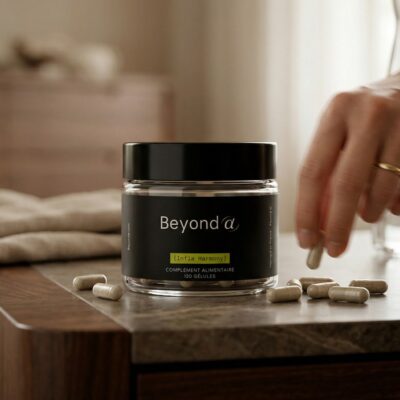
If your aim is to support an inflammatory background, astaxanthin is only one option, and it is not part of INFLA HARMONY. That anti-inflammatory formula with standardised extracts combines Longvida curcumin, boswellia, quercetin, ginger and alpha-lipoic acid, with its precautions printed in full: not recommended in pregnancy or breastfeeding, with bile duct problems or diabetes, or alongside anticoagulants, cancer treatment or immunosuppressants. Expect that level of transparency from any supplement, astaxanthin included.
Signs that mean you should stop
Most side effects are mild. Stop and get advice without delay if you notice black stools or blood in your stools, yellowing of the skin or eyes, a rash, or dizziness and light-headedness while on blood pressure medicine. Your pharmacist is a good first call, and NHS 111 can tell you how urgent it is.
Frequently asked questions
What happens if you take astaxanthin every day?
In healthy adults taking 2 to 12 mg a day, trials of 8 to 12 weeks found no safety problem, and red-tinged stools are the most common effect. Taking it with a meal that contains some fat helps absorption. In one trial, 2 mg a day lowered CRP while 8 mg raised two inflammatory markers, so more is not better.
Is astaxanthin harmful to the kidneys?
No human study has reported kidney harm at supplement doses. In an 8-week trial at 6 mg a day, a comprehensive metabolic panel, which includes the standard kidney markers, showed no meaningful difference from placebo. If you already have kidney disease, the data are thin, so check with your renal team or GP before you start.
Is 12 mg of astaxanthin too much?
It is above the 8 mg a day authorised for supplements in Great Britain, but not beyond the safety data: 35 of 87 human studies used 12 mg or more without a safety concern. EFSA’s acceptable daily intake is 0.2 mg per kilo, 14 mg for a 70 kg adult, food included. Staying at 8 mg keeps a margin.
Can I take vitamin D with astaxanthin?
No interaction between the two has been reported. Both dissolve in fat, so taking them together with a meal that contains a little fat suits both. If your vitamin D is prescribed, or you also take blood pressure, hormone or anticoagulant medicines, mention the astaxanthin to your pharmacist.
Sources
Brendler T., Williamson E.M. (2019). Astaxanthin: how much is too much? A safety review. Phytotherapy Research, 33(12), 3090-3111. DOI: 10.1002/ptr.6514
Spiller G.A., Dewell A. (2003). Safety of an astaxanthin-rich Haematococcus pluvialis algal extract: a randomized clinical trial. Journal of Medicinal Food, 6(1), 51-56. DOI: 10.1089/109662003765184741
EFSA Panel on Nutrition, Novel Foods and Food Allergens, Turck D. et al. (2020). Safety of astaxanthin for its use as a novel food in food supplements. EFSA Journal, 18(2), e05993. DOI: 10.2903/j.efsa.2020.5993
Ambati R.R., Phang S.M., Ravi S., Aswathanarayana R.G. (2014). Astaxanthin: sources, extraction, stability, biological activities and its commercial applications, a review. Marine Drugs, 12(1), 128-152. DOI: 10.3390/md12010128
Hussein G., Nakamura M., Zhao Q. et al. (2005). Antihypertensive and neuroprotective effects of astaxanthin in experimental animals. Biological and Pharmaceutical Bulletin, 28(1), 47-52. DOI: 10.1248/bpb.28.47
Angwafor F., Anderson M.L. (2008). An open label, dose response study to determine the effect of a dietary supplement on dihydrotestosterone, testosterone and estradiol levels in healthy males. Journal of the International Society of Sports Nutrition, 5, 12. DOI: 10.1186/1550-2783-5-12
Kistler A., Liechti H., Pichard L. et al. (2001). Metabolism and CYP-inducer properties of astaxanthin in man and primary human hepatocytes. Archives of Toxicology, 75(11-12), 665-675. DOI: 10.1007/s00204-001-0287-5
Park J.S., Chyun J.H., Kim Y.K., Line L.L., Chew B.P. (2010). Astaxanthin decreased oxidative stress and inflammation and enhanced immune response in humans. Nutrition and Metabolism, 7, 18. DOI: 10.1186/1743-7075-7-18


