


Turmeric in your cooking is not known to harm the liver, and small trials in fatty liver disease found slightly lower liver enzymes with curcumin. Concentrated supplements are another story: they have been linked to rare, unpredictable cases of hepatitis, mostly with high-absorption forms, which usually clear once the product is stopped.
So is turmeric good for the liver or bad for it? Both claims circulate, and they contradict each other less than they seem: they are not talking about the same product.
Is turmeric good for the liver?
Traditional medicine uses it for digestion, and that effect is real: turmeric stimulates the flow of bile. For the liver itself, the evidence is thin. A 2019 review pooled 4 trials and 228 people with non-alcoholic fatty liver disease, the fatty liver linked to excess weight. Liver enzymes fell slightly: AST dropped by about 9 units per litre in the 8-week trials, and ALT tended to fall from 1,000 mg of curcumin a day.
That is a signal on a blood marker, not a reason to “detox” your liver with a course of capsules. For fatty liver, the NHS treatment remains losing weight, eating well, moving more and cutting alcohol.
The hepatitis cases: what has been reported
The alert began in Italy in 2019, with around twenty cases of hepatitis in people taking turmeric supplements. The Italian health ministry found no contaminant in the products and made a warning compulsory on labels. In France, the food safety agency ANSES published its opinion in 2022: over 100 reports of side effects possibly linked to turmeric, including 15 cases of hepatitis.
| Where | Cases reported | What stands out |
|---|---|---|
| Italy, 2019 | Around twenty cases of hepatitis, mostly cholestatic | No contaminant found; warning added to labels |
| Tuscany (Lombardi, 2020) | 7 cases of acute hepatitis | All with high-bioavailability, high-dose products; most improved after stopping |
| France (ANSES, 2022) | Over 100 reports, including 15 cases of hepatitis | Concern over formulations that boost absorption |
| United States (DILIN network, 2004 to 2022) | 10 cases of liver injury, 1 death | 8 women, median age 56; 5 admitted to hospital; onset after 1 to 4 months |
These numbers are small, and probably underestimates. In 2018, doctors described a 71-year-old woman with autoimmune hepatitis while taking turmeric, which cleared once she stopped: the supplement was not in her records, and she was the one who made the link.

Why high-absorption forms change the picture
Curcumin barely reaches the blood. In a 2006 dose-escalation trial, volunteers swallowed up to 12 g at once: up to 8 g, no curcumin could be detected in their serum. That is what manufacturers try to get around.
The first route is piperine, from black pepper. It slows the liver and gut enzymes that clear curcumin: in volunteers taking 2 g of curcumin, 20 mg of piperine raised its bioavailability by 2,000%. How much pepper that really takes is explained in our article on turmeric and black pepper.
Other formulations rely on fats: lipid particles, micelles, phytosomes. The aim is the same, more free curcumin in the blood. For ANSES, that is the point: its dose benchmark only applies to standard turmeric, and these forms may carry a risk even at a modest stated dose.
WHAT RAISES THE RISK OF LIVER INJURY
hepatitis
High-absorption form
Piperine, lipids, micelles: more free curcumin in the blood.
High dose
Every Tuscan case involved a high-dose product.
First months of use
Injury appeared after 1 to 4 months in the American series.
Genetic make-up
HLA-B*35:01 in 7 American patients out of 10.
Fragile liver or bile, medicines
Leads flagged by the Italian ministry in 2019.
The genetic clue: HLA-B*35:01
Why some people and not others? The American DILIN series offers part of an answer.
of the HLA-B alleles in American patients with turmeric hepatitis were HLA-B*35:01, against 6 to 7% in control populations. Seven patients in 10 carried it.
Halegoua-DeMarzio et al., The American Journal of Medicine, 2023, DILIN network.
The HLA system presents foreign molecules to the immune system. This link points to an immune reaction rather than a simple overdose, so a lower dose does not fully protect you. HLA typing is not a routine test, and a negative result would not rule out the risk: 3 patients in 10 did not carry this type.
How much is safe, and for how long?
The European Food Safety Authority set the acceptable daily intake of curcumin at 3 mg per kilo of body weight, or 180 mg a day for a 60 kg adult. ANSES concluded that supplements should stay under 153 mg of curcumin a day for that adult, in standard form. For high-absorption forms, no specific limit exists yet.
Timing matters too: injuries mostly appear between the first and the fourth month. Those are the months to stay alert, and if you have risk factors, a liver function test is worth discussing with your GP.
Warning signs: when to stop and see a doctor
Stop the supplement and see your GP promptly if you notice any of these during a course:
- unusual tiredness, nausea or loss of appetite with no other explanation;
- dark urine, the colour of tea or cola;
- pale, putty-coloured stools;
- yellowing of the whites of your eyes or your skin;
- itching all over;
- pain under the ribs on the right.

Tell the doctor you take turmeric and name the product, so the blood test looks at your liver enzymes. In the UK, a suspected side effect of a herbal product can also be reported through the MHRA Yellow Card scheme.
Who should not take turmeric supplements?
The British Heart Foundation advises people with liver or bile duct problems not to take them, and anyone on blood thinners to check with their GP first. The Italian and French agencies point to the same situations:
| Situation | Why | What to do |
|---|---|---|
| Gallstones or bile duct disease | Turmeric stimulates bile flow | Avoid supplements |
| Known liver disease, past drug-induced hepatitis | The liver is already fragile | No supplement without your specialist’s advice |
| Anticoagulants, cancer drugs, immunosuppressants | The treatment’s effect or safety may change | Medical advice before any course |
| Several long-term medicines | Most published cases were taking at least one other drug | Ask your pharmacist |
| Pregnancy, breastfeeding | No data at supplement doses | Avoid; the spice in food is fine |
The same logic applies to quercetin and its interactions: on long-term treatment, ask before you buy.
And the curcumin in INFLA HARMONY?
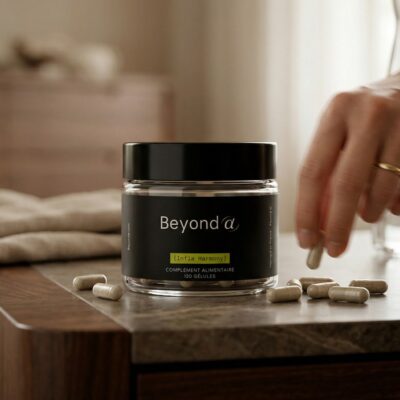
This site sells a formula that contains it, so precision is owed. INFLA HARMONY provides 400 mg of Longvida curcumin in 4 capsules, or 92 mg of curcuminoids, with no piperine. Longvida is a solid lipid particle formulation designed to absorb better: in healthy volunteers, 650 mg gave a peak of 22.4 ng of free curcumin per millilitre of blood, against nothing detectable with a standard extract of the same weight.
It is therefore an enhanced-absorption form in the ANSES sense, and the 153 mg benchmark does not apply to it directly. The label of our Longvida curcumin formula advises against it with bile disorders, in pregnancy and breastfeeding, with diabetes and with anticoagulants. Add liver disease or past hepatitis to that list, and stop at the first warning sign. Its other actives, including boswellia, have their own precautions.
Frequently asked questions
How much turmeric should you take for liver health?
No dose has been shown to protect the liver. Fatty liver trials used around 1,000 mg of curcumin a day and only nudged liver enzymes. For safety, ANSES advises supplements stay under 153 mg of curcumin a day for a 60 kg adult, in standard form. Cooking amounts need no limit.
Can turmeric cause liver damage?
Rarely, as a supplement. Around twenty cases of hepatitis were reported in Italy, 15 in France and 10 in the United States, including one death. Most involved high-absorption or high-dose products, appeared within 1 to 4 months and cleared after stopping. Turmeric used in cooking has no known risk.
Why don’t doctors recommend turmeric?
Because the evidence of benefit rests on small trials and blood markers, supplements vary widely in dose and absorption, and curcumin can interact with blood thinners and, rarely, injure the liver. Most doctors have no objection to the spice in food; a supplement is a case-by-case decision.
What is good for liver repair?
The liver repairs itself well once the cause stops. Cutting down on alcohol, losing excess weight, staying active and treating any viral hepatitis do the work. No supplement has been shown to repair a damaged liver, and some, turmeric included, can occasionally harm it.
Sources
Lombardi N. et al. (2020). Acute liver injury following turmeric use in Tuscany: an analysis of the Italian Phytovigilance database and systematic review of case reports. British Journal of Clinical Pharmacology, 87(3). DOI: 10.1111/bcp.14460
Halegoua-DeMarzio D. et al. (2023). Liver injury associated with turmeric, a growing problem: ten cases from the Drug-Induced Liver Injury Network [DILIN]. The American Journal of Medicine, 136(2). DOI: 10.1016/j.amjmed.2022.09.026
Lukefahr A.L. et al. (2018). Drug-induced autoimmune hepatitis associated with turmeric dietary supplement use. BMJ Case Reports. DOI: 10.1136/bcr-2018-224611
Lao C.D. et al. (2006). Dose escalation of a curcuminoid formulation. BMC Complementary and Alternative Medicine, 6. DOI: 10.1186/1472-6882-6-10
Shoba G. et al. (1998). Influence of piperine on the pharmacokinetics of curcumin in animals and human volunteers. Planta Medica, 64(4). DOI: 10.1055/s-2006-957450
Gota V.S. et al. (2010). Safety and pharmacokinetics of a solid lipid curcumin particle formulation in osteosarcoma patients and healthy volunteers. Journal of Agricultural and Food Chemistry, 58(4). DOI: 10.1021/jf9024807
Mansour-Ghanaei F. et al. (2019). Efficacy of curcumin/turmeric on liver enzymes in patients with non-alcoholic fatty liver disease: a systematic review of randomized controlled trials. Integrative Medicine Research, 8(1). DOI: 10.1016/j.imr.2018.07.004


