


Arthritis in the shoulder is usually osteoarthritis of the ball-and-socket joint, where the cartilage on the head of the upper arm bone and on its socket wears thin. It causes a deep ache, night pain, grinding and stiffness turning the arm outwards. It flares with inflammation of the joint lining. Exercise comes first; replacement is for pain that wrecks your nights.
Most pages on shoulder arthritis are written by surgeons and move quickly to replacement. Before any operation there can be many years, and the flares decide what those years feel like.
Which joint, and which kind of arthritis?
Two joints can wear. The main one, the glenohumeral joint, is a ball, the head of the humerus, turning in a shallow socket called the glenoid. The small acromioclavicular (AC) joint sits on top, where the collarbone meets the shoulder blade.
| Type | Where it hurts | Typical clue |
|---|---|---|
| Osteoarthritis of the main joint | Deep in the shoulder, front or back | Usually after 60, grinding, outward rotation lost first |
| AC joint arthritis | On top of the shoulder | Worse reaching across your body or lying on that side |
| Cuff tear arthropathy | Deep in the shoulder | Weakness lifting the arm after a long-standing rotator cuff tear |
| Rheumatoid or other inflammatory arthritis | Often both shoulders, plus other joints | Morning stiffness lasting well over 30 minutes, swollen hands or feet |
| Post-traumatic arthritis | The injured shoulder | Years after a dislocation or fracture, sometimes before 50 |
Osteoarthritis is far rarer in the shoulder than in the knee or hip, because the shoulder carries no body weight. It mostly appears after 60, earlier after a dislocation, a fracture or decades of heavy work.

What are the symptoms of osteoarthritis in the shoulder?
The pain is deep, felt at the front or back of the joint rather than down the outside of the arm. It builds with use and often wakes you at night. The movement you lose first is turning the arm outwards: brushing your hair, fastening a bra, reaching back for the seatbelt. Many people feel or hear grinding, called crepitus.
An X-ray does not explain pain on its own. A 2024 review looked for imaging changes in adults with no shoulder symptoms: in the two population studies, covering 846 shoulders, signs of osteoarthritis turned up in 15% to 75%. Plenty of shoulders that look arthritic never hurt.
The reverse holds too. A shoulder stiff in every direction may be a frozen shoulder, which blocks rotation the same way but leaves the X-ray normal. NICE allows osteoarthritis to be diagnosed without a scan after 45, yet for a stiff shoulder your GP will usually still order an X-ray, because it separates the two.
Concentric or eccentric: is your rotator cuff still working?
Surgeons split osteoarthritis of the main joint into two forms, which guide everything from exercises to the type of replacement. One question decides: do the four rotator cuff tendons, which keep the ball centred, still do their job?
| Concentric osteoarthritis | Eccentric osteoarthritis (cuff tear arthropathy) | |
|---|---|---|
| Cause | Wear of the cartilage itself, sometimes after an old dislocation or fracture | A large rotator cuff tear, present for years |
| Rotator cuff | Intact | Torn, often long before the arthritis |
| Position of the ball | Centred on the socket | Pulled up under the acromion |
| What you notice | Creeping stiffness, outward rotation lost, grinding | Arm hard to lift for lack of strength, sometimes impossible |
| On the X-ray | Narrowed joint space, spur under the ball | Gap under the acromion closed, ball touching bone |
| Replacement if needed | Anatomic, which copies the joint | Reverse, which lets the deltoid do the cuff’s work |
In the eccentric form, the cuff often gave way after years of shoulder tendinopathy. The deltoid then pulls the ball upwards until it rubs on the acromion. A torn cuff does not doom the joint, though. In 105 people with a degenerative tear that caused no symptoms, followed for a median of 8 years, arthritic changes progressed but stayed minimal.
Why does shoulder arthritis flare up?
Your shoulder can stay quiet for weeks, then flare for no obvious reason: sleepless nights, morning stiffness, every movement costly. The X-ray has not changed. The inflammation has.
HOW A FLARE STARTS
Osteoarthritis is not simple mechanical wear. A 2024 study examined the humeral heads and joint linings of 19 patients with either form. Inflammation of the lining, and pannus, an inflamed tissue that creeps over the cartilage, stood out as hallmarks of the disease, with the lining thickened most in cuff tear arthropathy. The authors see both as drivers of cartilage loss.

A flare shows as night pain coming back, longer morning stiffness and a shoulder that tolerates less. Reduce the load then, without immobilising the arm, and see your GP if it lasts more than a few days.
What are the treatment options for shoulder osteoarthritis?
Worn cartilage does not grow back, so treatment aims at three things: keeping movement, calming flares, and putting off the day a replacement becomes necessary.
| Treatment | What it does | What the evidence says | When |
|---|---|---|---|
| Exercise and physiotherapy | Keeps range and strength | No randomised trial without surgery yet; clear benefit in knee and hip osteoarthritis | At every stage, first |
| Anti-inflammatory gel or tablets | Ease pain during a flare | Act on pain, not on wear; tablets at the lowest dose, with stomach protection | Flares, after advice from a GP or pharmacist |
| Steroid injection | Settles a flare | Relief for 2 to 10 weeks (NICE); higher infection risk if a replacement follows soon | A flare that will not settle, spaced out |
| Hyaluronic acid injection | Slightly less pain for some | Control groups improve almost as much; NICE advises against it | Rarely, mostly privately |
| Anatomic replacement | Removes the pain of wear, gives back movement | 92.0% still in place at 10 years in registries | Advanced concentric form, pain that ruins nights |
| Reverse replacement | Gives back the ability to lift the arm | 93.6% at 10 years for cuff tear arthropathy | Eccentric form, cuff beyond repair |
Exercise and physiotherapy
A shoulder you protect too much stiffens fast. Exercises work on range first, then on the muscles that steady the shoulder blade. One honest caveat: a 2026 systematic review found no randomised trial of physiotherapy alone in shoulder osteoarthritis; all four trials dealt with rehabilitation after a replacement. The advice rests on how the disease behaves and on strong evidence in the knee and hip, which makes exercise a core treatment in NICE guidance.

Three exercises make the base: the pendulum, leaning forward with the arm swinging in small circles; the stick lift, lying on your back, the good arm guiding; and outward rotation, elbow tucked in, against a light band. Pain during exercise can reach 3 or 4 out of 10. The next morning decides: if it is worse, drop back a level. In many areas you can refer yourself to NHS physiotherapy.
Painkillers and injections
NICE suggests an anti-inflammatory gel first, then tablets at the lowest dose for the shortest time, with stomach protection. It no longer recommends paracetamol routinely: the evidence of benefit is weak.
A steroid injection can settle a stubborn flare, but it does not protect the cartilage. If a replacement is on the horizon, space them out. In a meta-analysis of 136,233 patients, prosthetic infection affected 5.4% after an injection at any time before surgery, 7.9% within 3 months and 9.0% within a month. The time gradient was not statistically significant; the overall link was.
Hyaluronic acid looks better on paper than it is. A 2019 meta-analysis found pain fell by 26.2 mm on a 100 mm scale at 3 months, but control groups improved almost as much, the mark of a strong placebo effect from any shoulder injection.
When is a shoulder replacement worth considering?
The X-ray does not decide; your life does. Pain that wakes you most nights despite good treatment, everyday tasks you can no longer manage: that is when to ask for a referral to a shoulder surgeon. As with hip osteoarthritis, surgeons operate on pain and lost function, not on an image.
Shoulder replacements still in place 10 years after surgery, across published series and national joint registries.
Evans et al., The Lancet Rheumatology, 2020
The figure comes from a University of Exeter team, funded in part by the National Joint Registry. In registry data, 92.0% of anatomic and 94.4% of reverse replacements done for osteoarthritis were still in place at 10 years, and patients’ gains in pain and function held as long.
Living with shoulder arthritis day to day
Nights are often the hardest part. Avoid lying on the arthritic side and slip a pillow under the arm on your back; our guide to shoulder pain at night covers the positions.
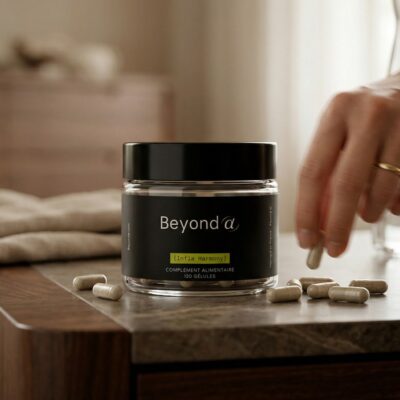
Excess weight, inactivity and short sleep keep background inflammation simmering. INFLA HARMONY, our joint support formula for the over-50s, combines Longvida curcumin, boswellia, ginger, quercetin and alpha-lipoic acid. It supports movement and care; it does not repair cartilage. It is not recommended if you have diabetes or a bile duct disorder, are pregnant or breastfeeding, or take anticoagulants, cancer medicines or immunosuppressants.
Call 111 or your GP the same day if the shoulder turns red, hot and very painful with a fever, or if you suddenly cannot lift the arm after a fall.
Frequently asked questions
What is the best pain relief for arthritis in the shoulder?
For most people, an anti-inflammatory gel rubbed into the shoulder comes first, then ibuprofen-type tablets at the lowest dose for short spells, with stomach protection. NICE no longer recommends paracetamol routinely for osteoarthritis. A steroid injection can settle a stubborn flare for 2 to 10 weeks. Ask a pharmacist what suits your health.
Can arthritis in the shoulder cause pain down the arm?
Yes, into the upper arm and sometimes to the elbow, as the joint refers pain over the deltoid. Pain running below the elbow into the hand, with pins and needles or numbness, points instead to a trapped nerve in the neck.
Can arthritis in the shoulder be cured?
Worn cartilage does not grow back, so the wear cannot be reversed. The pain varies a great deal, though: an arthritic shoulder can stay calm for months between flares. Treatment targets the flares and your use of the arm, and when wear is advanced, a replacement relieves pain in most people.
Sources
Ibounig T., Sanders S., Haas R. et al. (2024). Systematic review of shoulder imaging abnormalities in asymptomatic adult shoulders (SCRUTINY): abnormalities of the glenohumeral joint. Osteoarthritis and Cartilage, 32(10), 1184-1196. DOI: 10.1016/j.joca.2024.06.001
Chalmers P.N., Salazar D.H., Steger-May K. et al. (2016). Radiographic progression of arthritic changes in shoulders with degenerative rotator cuff tears. Journal of Shoulder and Elbow Surgery, 25(11), 1749-1755. DOI: 10.1016/j.jse.2016.07.022
Toegel S., Martelanz L., Alphonsus J. et al. (2024). The degenerated glenohumeral joint. Bone & Joint Research, 13(10), 596-610. DOI: 10.1302/2046-3758.1310.BJR-2024-0026.R1
Muhammad D.G., Foster N.E., Pelaez M. et al. (2026). The effectiveness of physiotherapy-led non-surgical and perioperative interventions for glenohumeral osteoarthritis: a systematic review. Shoulder & Elbow, 18(6), 1373-1385. DOI: 10.1177/17585732261450961
Schoell K., Crabb R., Simpson E. et al. (2024). Preoperative corticosteroid injections are associated with a higher periprosthetic infection rate following primary total shoulder arthroplasty: a systematic review and meta-analysis. Journal of Shoulder and Elbow Surgery, 33(12), 2734-2742. DOI: 10.1016/j.jse.2024.05.025
Zhang B., Thayaparan A., Horner N. et al. (2019). Outcomes of hyaluronic acid injections for glenohumeral osteoarthritis: a systematic review and meta-analysis. Journal of Shoulder and Elbow Surgery, 28(3), 596-606. DOI: 10.1016/j.jse.2018.09.011
Evans J.P., Evans J.T., Craig R.S. et al. (2020). How long does a shoulder replacement last? A systematic review and meta-analysis of case series and national registry reports with more than 10 years of follow-up. The Lancet Rheumatology, 2(9), e539-e548. DOI: 10.1016/S2665-9913(20)30226-5


